Standing Water in Your Crawl Space: What It Means and What to Do
Last updated: August 2026
If you've opened your crawl space access panel and found standing water, the first question is usually "do I have a leak?" In Rutherford County, the answer is almost always no. Standing water under a house here is more often a combination of shallow limestone bedrock, dense clay soil, and heavy rainfall than anything wrong with your plumbing.
That doesn't mean it's fine to leave. Standing water under a house is a real problem — just not the emergency-plumber kind of problem. Here's what's actually happening and what to do about it.
Is this urgent?
Not an emergency in the sense of shutting off water or evacuating the house. But it's not something to put off, either.
Standing water under a home creates the conditions for wood rot, mold growth, and — over enough time — damage to the floor joists and subfloor above it. The longer it sits, the more it costs to fix, because standing water doesn't just sit there quietly. It wicks into wood, feeds mold, and rusts anything metal it touches.
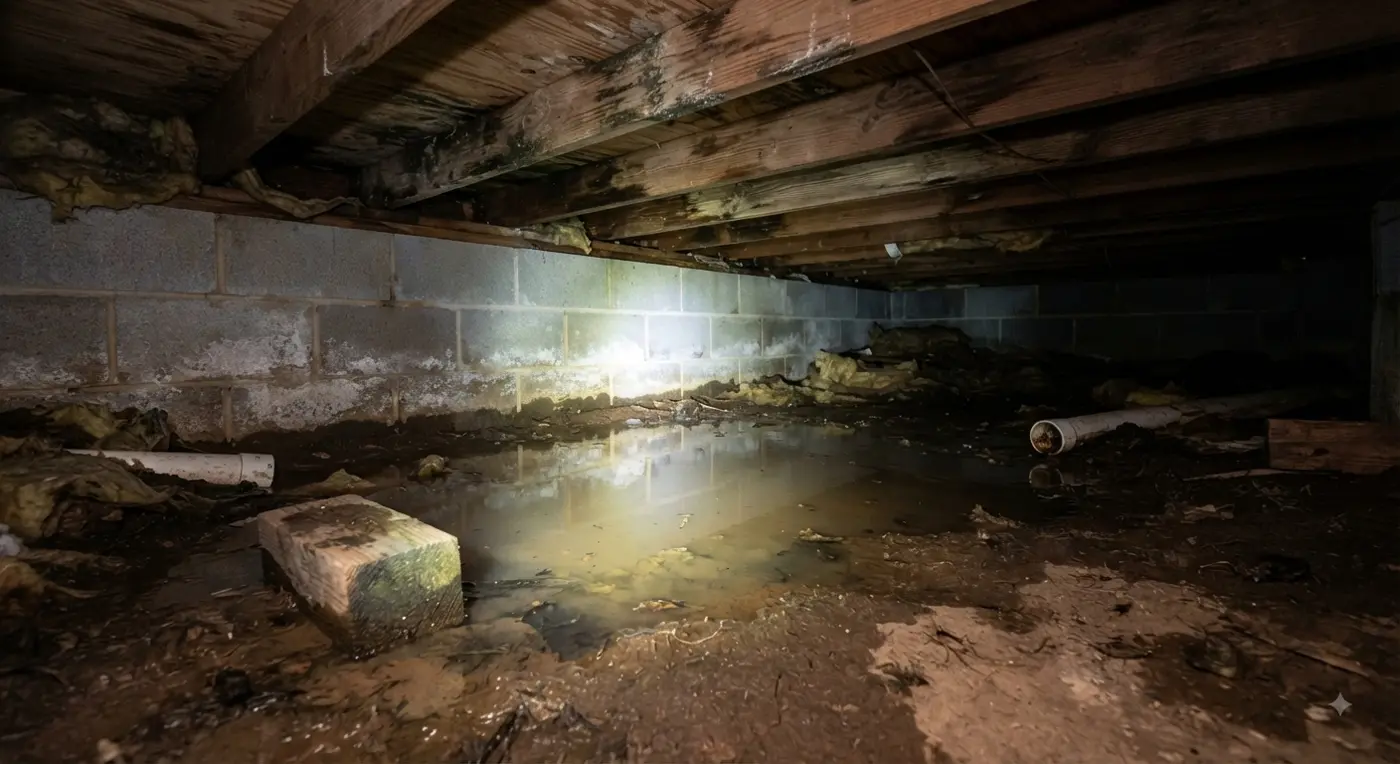
A reasonable timeline: get it looked at within a few weeks, not the same day. If you're also noticing a musty smell in the house above it, that's a sign it's been there a while and moving faster makes sense.
What's actually causing it
There are three real explanations, and only one of them is a plumbing issue.
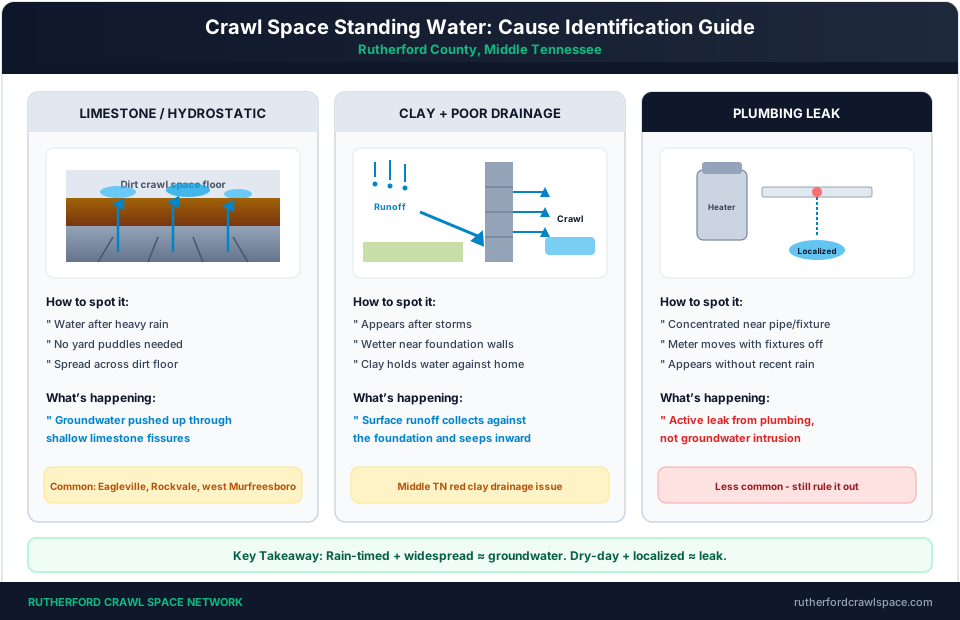
Limestone bedrock close to the surface
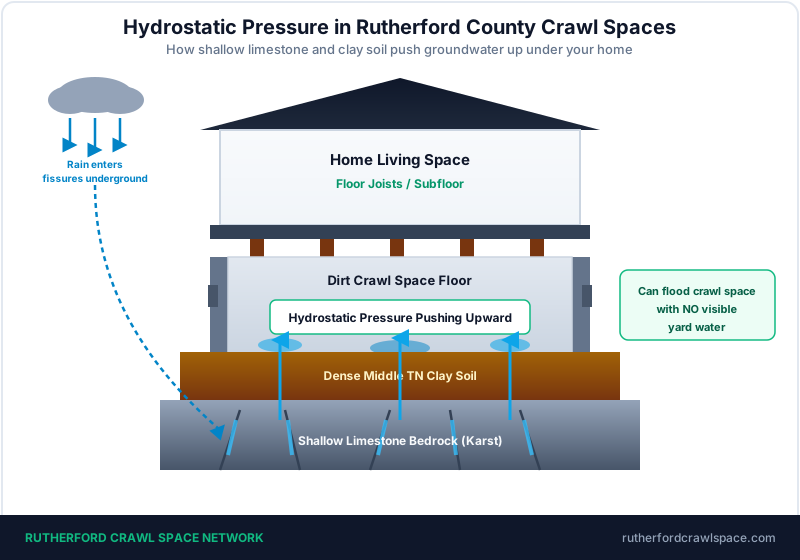
Much of Rutherford County — especially around Eagleville, Rockvale, and west Murfreesboro — sits on shallow limestone with karst features. Heavy rain moves through fissures in the bedrock and can push groundwater up through a dirt crawl space floor under pressure. This can happen even with no visible puddle anywhere in the yard, because the water is moving underground, not across the surface.
Clay soil and poor drainage
Middle Tennessee's dense red clay absorbs water slowly and holds surface runoff against foundation walls instead of letting it drain away vertically. After a heavy storm, that water has nowhere to go but toward the lowest point it can find — which is often the dirt floor of a crawl space.
An actual plumbing leak
Less common than the two above, but worth ruling out. A few signs point toward a leak rather than groundwater intrusion:
- The water is concentrated near a specific pipe, fixture, or the water heater, rather than spread across the floor
- Your water meter keeps moving when every fixture in the house is off
- The water appears regardless of recent rainfall
If none of those apply and the water shows up mainly after rain, groundwater is the more likely explanation.
How professionals fix it
The right fix depends on which of the three causes above is driving it, and a proper inspection should identify which one (or which combination) applies to your home before any work starts.
For hydrostatic pressure through bedrock or persistent groundwater: a sump pump system with a basin, sometimes paired with an interior perimeter drain that channels water to the pump before it can spread across the floor.
For surface drainage against clay soil: grading correction outside the home, sometimes combined with exterior drainage work, so water stops collecting against the foundation in the first place.
In most cases: a vapor barrier alone, without addressing the water source, doesn't solve standing water — it just traps it underneath the liner. Encapsulation and drainage are usually a package, not a choice between one or the other, when active water is involved.
For a full breakdown of what these repairs typically cost, see our crawl space cost guide.
What happens if you ignore it
Standing water doesn't resolve on its own, and Rutherford County's climate doesn't give it much chance to dry out between rain events.
Left alone, it typically leads to:
- Wood rot in floor joists and the sill plate, which can eventually affect how solid the floor feels above it
- Mold growth on framing, since standing water keeps humidity in the crawl space elevated even when it's not actively raining
- Musty odors that reach the living space, since roughly half the air in a typical home first passes through the crawl space
- Rust and corrosion on any ductwork, straps, or metal fasteners in contact with the moisture
None of this happens overnight. But it also doesn't reverse itself, which is the main reason to get it looked at rather than wait and see.
For general guidance on moisture control and mold prevention, the EPA's guide to mold, moisture, and your home is a useful independent reference.
Frequently asked questions
Get a free inspection
A licensed local specialist can identify exactly what's causing the water and give you a written scope of work — no pressure, no obligation.